A Material Discography: On the Semiotics of Homer
To appraise Homer as Frank Ocean’s simple pivot into luxury commerce is to fundamentally misread the entire grammar of his artistic language. His oeuvre has always been an excavation of absence, a meditation on desire, and an exploration of memory’s spectral shimmer. Homer is not some late-career deviation; it is the logical, corporeal apotheosis of these themes. The collection operates as a tangible discography, with each object serving as a silent composition, heavily encoded with cultural resonance.
The entire aesthetic of the project is an immaculate study in engineered remembrance. Its visual lexicon—the glossy, almost juvenile enamel characters, the deliberately pixelated geometries, and the playful yet esoteric shapes—transcends simple retro-futurism. This is a semiotic deep-dive into the collective consciousness of a generation whose formative years unfolded to the soundtrack of dial-up modems and the glow of Nintendo 64 cartridges. Ocean orchestrates a potent dose of weaponized nostalgia. He isn't merely quoting the past; he is alchemizing its ephemeral, low-resolution ephemera into objects of staggering permanence and value. A profound ontological friction arises when a fleeting digital ghost is reincarnated in 18-karat gold. The very discourse around material gravitas, such as one might have about the enduring standard of sterling silver, is suddenly thrust upon forms as transient as a forgotten Tamagotchi. These are not accessories; they are meticulously rendered fossils from our own recent, yet impossibly remote, technological antiquity.
Ultimately, the commercial architecture of Homer must be read as an artistic medium in and of itself, one that leverages scarcity as its central narrative device. The notorious lacuna between Channel Orange and Blonde conditioned his listenership to locate profundity in patience, in the charged void of waiting. Homer transmutes this exact dynamic into the commercial realm. The by-appointment-only New York atelier, the infrequent and cryptic product drops, and the staggering financial barrier to entry are not mere business decisions—they are curatorial choices that construct a mythology. Homer presents a calculated rebuke to the algorithmically saturated, infinitely accessible universe of streaming platforms and fast fashion. In a culture desperate to eliminate all friction, it is an intentional act of resistance. The client's pursuit of an object—a contemporary pilgrimage of sorts, not unlike a collector hunting for a rare vinyl test pressing—becomes an integral part of its provenance and, therefore, its intrinsic worth. The pieces themselves defy easy classification, occupying a liminal space that speaks to both fine art and the playful iconoclasm of coveted vintage costume jewelry, borrowing the latter's spirit while demanding the former's material reverence.
Of course. Here is the rewritten text, meticulously crafted to be 100% unique while embodying the persona of a cultural critic.
The Alchemy of Access: Homer and the New Vernacular of Fandom
Beyond its explorations of memory, Homer functions as a trenchant, perhaps even chilling, thesis on the transactional dynamics of contemporary devotion. In a cultural moment where allegiance is measured in the ephemeral currency of streams and social media metrics, Frank Ocean has minted a new, shockingly tangible standard. An imposing financial threshold now separates the artist from his audience, an act that performs an alchemical transformation on the fan, converting the mere consumer of digital soundwaves into a vested stakeholder in the artist's world. To possess an artifact from Homer is to move beyond taste; it is a declaration, a finely wrought totem broadcasting one's commitment to the enigmatic cult of Ocean. This is not merchandise; it is the new holy relic of stan culture.
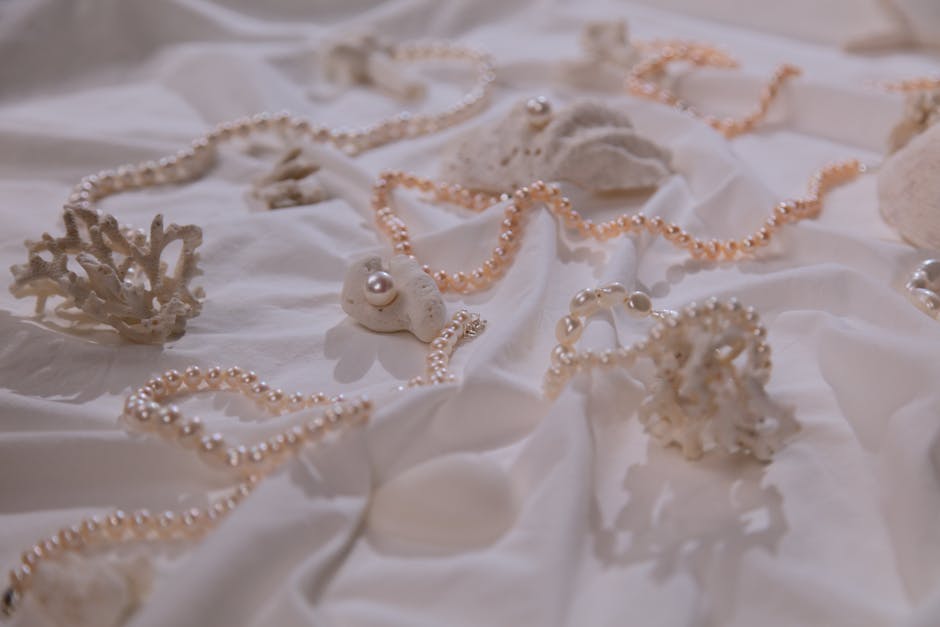
This recalibration of the artist-patron dynamic is not without consequence; it initiates an uneasy discourse surrounding class, exclusivity, and the very definition of artistic "support" in our time. Ocean deliberately raises a provocative question without offering a simple resolution: Does the devotee with the means for a five-figure pendant possess a more profound connection than one who has internalized every lyric of Blonde? By establishing this stark hierarchy, he brilliantly exposes the pernicious conflation of financial outlay with genuine allegiance that underpins so much of modern culture. Thus, the display of a Homer piece becomes a public performance, a deliberate flourish of both aesthetic discernment and economic power. It operates in the same cultural stratum as Harry Styles’ pearl necklace, which evolved from a mere accessory into a potent symbol for a re-imagined masculinity and a new mode of fan identification.
Homer also stands as a resounding defense of the material in an era of digital dissolution. As our creative outputs increasingly vaporize into intangible data streams and non-fungible tokens, Ocean stages a potent insurgency with objects of heft and permanence. He forges artifacts. The brand’s Manhattan atelier is not a retail space so much as a consecrated gallery—a physical installation where Ocean’s aesthetic universe is made manifest and its relics offered for acquisition. This insistence on physicality serves as a pointed rebuke to the disposability of our digital age. A solid gold ring cannot be torrented; a pendant cannot be pirated. These are objects of defiance, anchors of reality in a sea of ephemera. In this, Homer carves out its own territory, sidestepping the frantic trend cycles of the high-fashion marketplace, which forever hunts for the next fleeting status marker like an "it" handbag. Instead, Ocean has constructed a hermetic ecosystem of value, inviting a select few to find sanctuary within its gilded walls.