8 Articles in this category
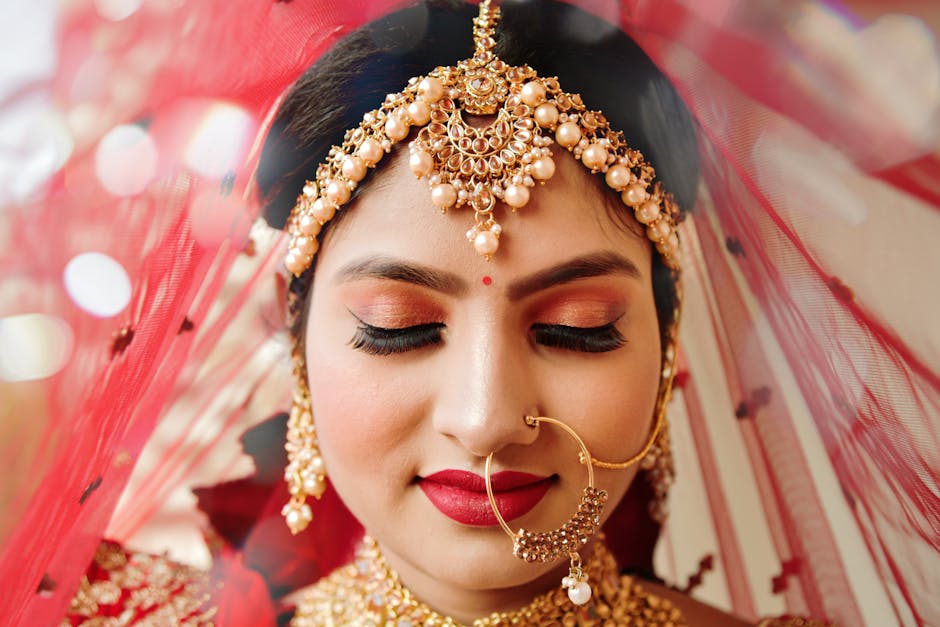
You've been taught to match your bindi to your lehenga, but what if its true power has nothing to do with color? We're reframing the bindi not as an accessory, but as an architectural tool. Prepare to see your own face differently as we explore how a few millimeters can elongate your profile, sharpen your gaze, and transform your entire look. As a makeup artist who began my journey in the fine arts, I see faces not as blank slates, but as living sculptures. Every plane, every curve, every angle presents an opportunity. For too long, the bindi has been relegated to the final step—a colorful afterthought. I'm here to tell you it should be the first consideration. It is the keystone of your facial structure, the central point from which all other features can be balanced and enhanced. This guide is your introduction to facial cartography, using the bindi as your most precise and powerful compass.
Forget the over-filled lips and frozen foreheads that dominate the headlines. The true genius of Hollywood's top cosmetic surgeons lies not in what you see, but in what you don't. We're pulling back the curtain on the undetectable art of the A-list 'tweakment,' celebrating the subtle work that perfects a famous face without a trace. This isn't about erasing a decade or manufacturing a new jawline; it's about the millimeter-precise adjustments that make a face appear better-rested, more harmonious, and effortlessly radiant under the unforgiving glare of a 4K camera. It’s the whisper of enhancement, a silent conversation between a skilled practitioner and a discerning client, where the ultimate goal is for the world to notice their beauty, not their work.
You saw the viral post and probably saved it for your next salon visit. But while the world was hunting for the perfect chrome powder, a complex financial machine was already in motion. That celebrity manicure wasn't just a pretty trend; it was a calculated economic event that generated millions, shifted product demand overnight, and proved the most powerful force in the beauty industry might be at a celebrity's fingertips. This isn't just about aesthetics; it's about arbitrage, supply chains, and the strategic deployment of cultural capital. We're moving beyond the look to uncover the ledger.
You can instantly recall the scent of Britney Spears' Fantasy or Rihanna's Fenty Eau de Parfum, but can you name the artist who actually created it? While a celebrity's face is on the bottle, a secret world of master perfumers—the 'ghost-nosers' of the fragrance industry—are the true authors of these olfactory bestsellers. We're pulling back the curtain on the invisible geniuses who bottle fame. This isn't a review of what these fragrances smell like; it's an exposé on who made them and how their unseen artistry defines a star's entire brand. We're moving past the marketing and into the lab to celebrate the ghostwriters of scent.
We've all bought the 'miracle' serum a celebrity swears by, hoping to capture a fraction of their red-carpet glow. But what if that $150 cream is less than 1% of the real story? The truth is, flawless celebrity skin isn't bought at a beauty counter; it's an institution built on a budget that could rival a small start-up. My sources, who manage the finances for A-list talent, have let me see the spreadsheets. Forget the sponsored Instagram posts and the 'get ready with me' videos. We're about to dismantle the real architecture of celebrity skin—a meticulously managed, six-figure-plus annual investment in cellular-level wellness that makes topical products little more than a finishing touch.
You found the perfect conch ring online, a delicate hoop that looked stunning on the model. Yet, in your own ear, it sits awkwardly, causes irritation, or simply doesn't look right. This frustrating experience isn't about bad style—it's about anatomy, and understanding it is the secret to unlocking the perfect fit. As a piercer who specializes in ear curation, I see this constantly. Clients come in defeated, holding a beautiful piece of jewelry that has become a source of pain and disappointment. My job isn't just to perform a piercing; it's to be an architect for your ear, mapping its unique landscape to build a collection of jewelry that is not only beautiful but feels like it was made for you. This article will shift your focus from fleeting trends to the timeless principle of anatomical harmony, ensuring your next conch ring is a triumph of personal style and comfort.
You see the flawless face on the red carpet, a perfect picture of glamour. What you don't see is the frantic ten minutes before, when a stress-induced breakout appeared or an emotional moment smudged the liner. This is where the celebrity makeup artist's real job begins—long after the brushes are down. We aren't just artists; we are first responders for the face, armed with much more than lipstick. Our true value is measured in crises averted and meltdowns managed, ensuring the star's image remains pristine under the harshest lights. This is the part of the job that never makes it to Instagram.
You picked the perfect belly bar and followed all the aftercare rules, but your piercing is still constantly irritated. The problem might not be your routine, but a crucial mismatch most people overlook: your jewelry's shape versus your navel's unique anatomy. For over a decade, I've seen countless clients walk into my studio frustrated with angry, unhealed navel piercings. They blame their aftercare, their metal sensitivity, or just 'bad luck.' In over 90% of these cases, the culprit is the same: they're wearing jewelry that is fundamentally incompatible with the way their body is built. This article isn't about trendy jewelry; it's about the foundational secret to a happy navel piercing that the industry is only now beginning to discuss openly—anatomy is everything.