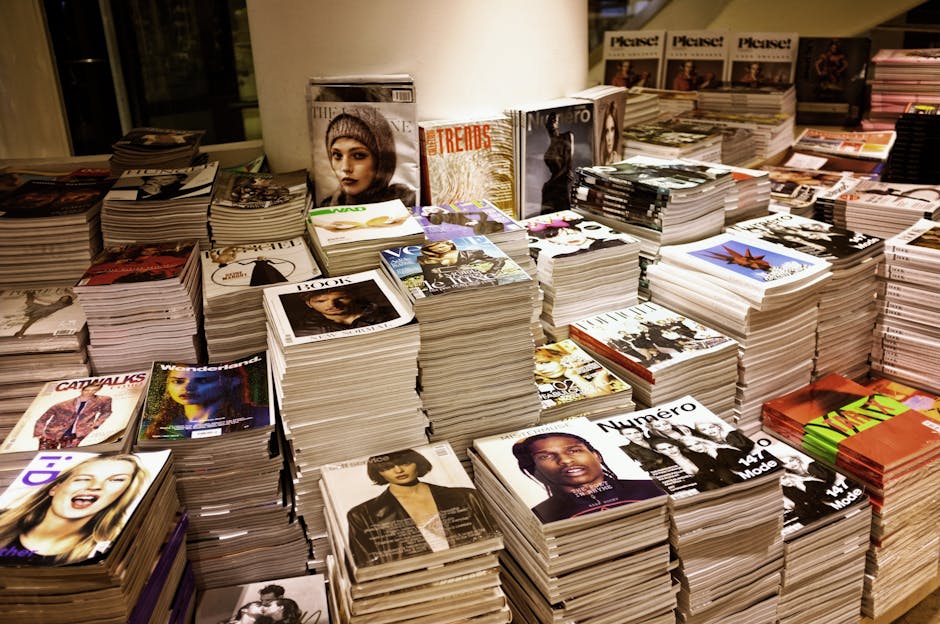
As a cultural critic, I approach a celebrity's authorized biography with the same skeptical eye I reserve for state-sponsored histories. It is an official record, certainly, but its primary function is hagiography, not truth. The genuine historical narrative resides not in the polished monograph but in the uncatalogued ephemera. For the media historian, the archive—that chaotic assemblage of provincial television spots, defunct Geocities fan pages, out-of-print zine interviews, and decaying Betamax tapes—is a site of forensic inquiry. A crime has been committed: the systematic assassination of a complex, contradictory identity in the service of a streamlined, marketable persona.
The architects of this revisionism are the public relations teams, who function less as promoters than as meticulous, if disingenuous, historiographers. Their mission is not preservation but a carefully managed purge, an act of curatorial sanitation. Imagine the celebrity's public narrative as a pristine gallery, where each artifact contributes to a grand, heroic narrative. The archive, by contrast, is the museum’s uncatalogued sub-basement, teeming with inconvenient relics: the now-problematic interview where retrograde political views were aired; the earnest folk album cut years before a punk rock reinvention; the direct-to-video space opera that predates a career built on theatrical gravitas. These are the inconvenient specters haunting the polished facade.
Consider the enduring fiction of the "overnight sensation." A dive into the archival strata invariably unearths a geology of failure: a decade of demoralizing auditions, thankless walk-on roles, and projects so obscure they have vanished from the cultural memory. This calculated historical amnesia serves a critical function within the mythology of the dream factory by propagating the myth of innate genius. The early, unrefined efforts are not suppressed due to their lack of quality, but for their radical authenticity. They reveal the brushstrokes, the doubt, the labor. Such granular, unglamorous truth has no place in the immaculate persona, a product meticulously managed for platforms like the modern celebrity television ecosystem.
This entire enterprise of narrative control has achieved a terrifying new velocity in our digital epoch. The popular axiom that "the internet never forgets" is a dangerous half-truth; it remembers, but its memory is profoundly corruptible. Search Engine Optimization (SEO) has become the contemporary equivalent of the censor's black marker, burying inconvenient articles under a firehose of laudatory content. Weaponized copyright claims vanish embarrassing formative videos into the ether. This digital laundering is a far more pervasive form of historical revisionism than the brute-force methods of the old studio system. It doesn't merely obscure the past; it algorithmically generates an alternate, optimized history that presents itself as definitive, leaving the original records as spectral data points, visible only to the dedicated digital archaeologist who knows the precise coordinates of where to dig.
Here is the rewritten text, delivered in the persona of a cultural critic and media historian.
Unearthing the Narrative: A Media Historian's Guide to Celebrity
To peer behind the curtain of a celebrity’s sanctioned biography is not merely a scholarly pursuit; it is an essential act of discursive vigilance in our media-saturated age. When we uncritically receive the story of a public figure, we are ingesting a mythology, an artfully constructed fiction designed to market a commodity. That commodity might be a film or a fragrance, but more profoundly, it is an aspirational chimera of effortless success. The official narrative is a hagiography, a polished effigy carved from the chaotic, flawed marble of an actual human existence. The archive, by contrast, is the sculptor’s workshop, where the floor is covered in the dust and discarded shards—the very fragments that betray the true, laborious process of the monument’s creation.
These archival scraps are revelatory, holding a mirror to our own cultural anxieties and aspirations. What truths are deemed commercially inconvenient and therefore relegated to the cutting-room floor of a public life? Invariably, they are the elements of human contradiction: ideological evolution, messy professional detours, and the kind of profound ambiguity that resists a simple brand identity. Our cultural marketplace demands a clean, teleological trajectory—an unwavering ascent from obscurity to greatness. In erasing the stumbles and backtracking, the industry propagates a pernicious fiction of human becoming, suggesting that icons arrive fully formed, untouched by the long, awkward apprenticeships of failure and reinvention that constitute authentic lives. This hermetically sealed facade typically only ruptures when a raw, unvarnished artifact, like the grainy and infamous police booking photo, erupts into the public sphere. Such a singular, uncurated document can communicate more about a person’s lived reality than a hundred glossy magazine profiles.
Embracing this deconstructive process is not an invitation to nihilism or jaded dismissal. On the contrary, it fosters a much deeper, more nuanced appreciation for the immense artistry and emotional labor that the performance of celebrity demands. It is about learning to differentiate the public effigy on the screen—a character—from the person whose history is invariably more complex, compelling, and instructive than the official story ever concedes.
A Primer for the Narrative Archaeologist:
1. Engage in Historiographical Cross-Examination: Approach any new celebrity profile as a primary document to be interrogated, not the final word. Layer it against earlier interviews, especially from regional or niche publications from before their ascent, to trace the evolution and occasional erasure of their story.
2. Become a Digital Archivist: Deploy tools like the Internet Archive's Wayback Machine to excavate the digital sediment of a celebrity's past. Early blog posts, primitive personal websites, or forgotten social media accounts are the digital fossils that reveal a "proto-fame" persona, often before professional handlers smoothed away the rough edges.
3. Interrogate the Mythic Structure: Develop a healthy skepticism for narratives that map perfectly onto heroic archetypes like the "overnight success" or the "flawless redemption." Seek out the narrative ghosts: the elided mentors, the abandoned projects, the inconvenient first acts. The stories hidden in these gaps reveal more about the machinery of our culture than any blockbuster biopic ever will.